
Healthcare in 13F Filings: GLP-1 Winners, Vaccine Era Exits, and a Divided Big Pharma
In two years, institutional managers added more than 1,100 new positions in a single pharmaceutical stock — and completely abandoned another that had been worth $25 billion. Across the twelve largest healthcare and pharma names in 13F filings, Q4 2023 to Q4 2025 wasn't a story of the sector rising or falling together. It was a story of sharp divergence: GLP-1 drug makers pulling away, pandemic-era names being unwound, and a handful of concentrated managers making outsized bets that won't show up in any index.
The full picture: holder counts and dollar flows moved in different directions
Looking at the change in institutional holders alongside the change in aggregate dollar value tells a richer story than either number alone. Some stocks gained holders but saw flat or declining dollar totals (Merck), while others shed holders even as their aggregate values climbed (Regeneron). The chart below shows both dimensions for each name.
Blue/orange bars = dollar value change (left axis). Green/red dots = holder count change (right axis). Q4 2023 → Q4 2025.
Eli Lilly pulled away from the rest of the group
Eli Lilly (LLY) went from 3,268 institutional holders in Q4 2023 to 4,376 by Q4 2025 — a gain of more than 1,100 institutions, or 34%. Its aggregate institutional value rose from $433 billion to $811 billion over the same period. No other healthcare stock in this dataset came close to that combination of holder growth and absolute scale. The GLP-1 obesity drug story (tirzepatide/Mounjaro/Zepbound) is the obvious driver, but the data suggests institutions weren't just following a short-term trade — they kept adding throughout 2024 and 2025 even as the stock's valuation became increasingly stretched.
The pandemic-era names are being unwound
Moderna (MRNA) lost nearly a quarter of its institutional holder base over two years — 885 holders in Q4 2023, 669 by Q4 2025. That's a sustained, persistent exit rather than a single quarter reaction. The market for COVID vaccines has contracted sharply from its 2021–2022 peak, and Moderna's pipeline in RSV, flu, and cancer vaccines has yet to produce the kind of revenue that would justify its former valuation to most institutional managers.
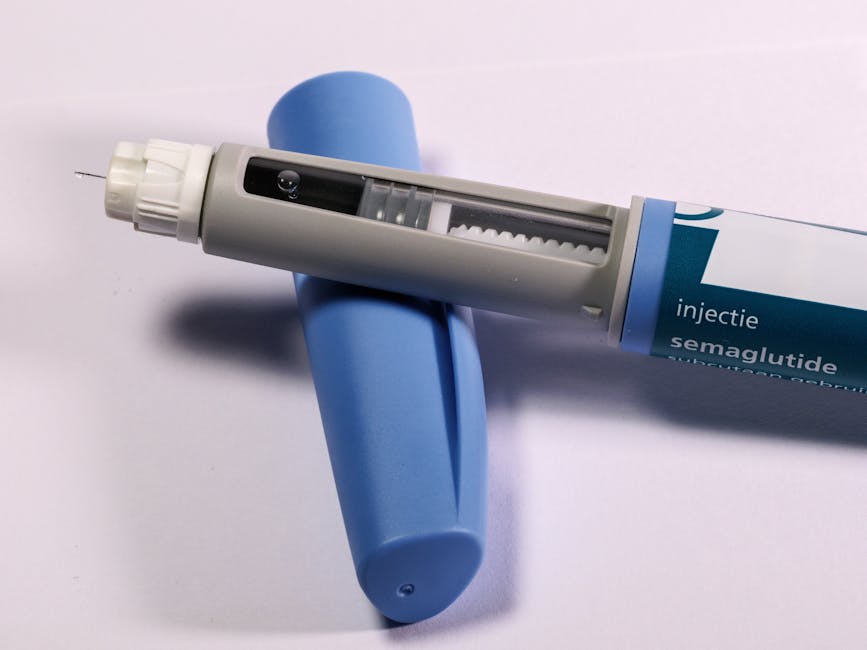
Novo Nordisk (NVO) tells a more nuanced version of the same pattern. Despite being the other dominant GLP-1 player alongside Lilly, Novo Nordisk shed institutional holders in 2025 — falling from 1,510 in Q4 2023 to 1,398 by year-end, a 7% decline. The company's own GLP-1 franchise (semaglutide/Ozempic/Wegovy) is large and growing, but a trial setback for its next-generation obesity drug candidate CagriSema in late 2024 disappointed the market and may have prompted a reassessment of how much of the GLP-1 opportunity Novo would be able to capture relative to Lilly.
Big Pharma: more holders came in, but the conviction wasn't uniform
Most of the traditional large pharma names added institutional holders over the two years. AbbVie and Gilead both grew 23%, Johnson & Johnson and Vertex 15%. Even Bristol-Myers Squibb inched higher. Pfizer was the outlier — one of the only names in this group to lose holders outright.
But holder counts don't capture the full story. Merck gained 182 holders while its aggregate institutional value stayed flat at $198 billion — new institutions showed up, but at smaller allocations, while existing holders trimmed. Regeneron gained holders too, yet aggregate value dropped from $77 billion to $66 billion. The chart above makes these disconnects visible.
Weight tells a different story than holder counts
Among the $10B+ managers that held these stocks in both periods, average portfolio weights declined for nearly every name except Lilly and AbbVie. The pattern splits into recognizable groups.
Lilly was the clear weight gainer: large managers increased their average LLY allocation by 23 basis points, from 1.24% to 1.47%. Some of those moves were dramatic — Capital Research Global Investors ($542B AUM) took LLY from 1.1% to 4.9% of its portfolio, a 379-basis-point increase. PNC Financial Services ($183B) pushed its already-large LLY weight from 24% to 30%. Polen Capital ($23B) went from a 0.2% position to 5.7%. These aren't passive index moves — they're active overweight decisions at significant scale.
Diversified pharma names saw modest weight erosion on average (−4 bps across the group), but Merck stood out with −18 bps. AbbVie was the exception, gaining 3 bps — consistent with the Skyrizi/Rinvoq franchise offsetting the Humira cliff. The pandemic-era names lost an average of 7 bps. Biotech (Biogen, Regeneron, Vertex) lost a steady 4–7 bps each.
The exits were notable too. GQG Partners ($61B) fully exited a 4.0% LLY position while simultaneously opening a 2.6% JNJ weight — rotating within healthcare, not out of it. Baillie Gifford ($126B) cut Moderna from 3.6% to 0.5%. Parnassus Investments ($45B) dropped Gilead entirely while adding a new 2.8% LLY position. The same rotation showed up repeatedly: out of the names where the thesis had weakened, into the one where it hadn't.
Biotech within the group showed divergence too
Biogen (BIIB) ended Q4 2025 with 988 holders — slightly below the 1,002 it had in Q4 2023. The Alzheimer's drug lecanemab (Leqembi, co-developed with Eisai) launched during this period but uptake has been slower than some hoped, and its commercial trajectory kept the holder base essentially flat. Regeneron (REGN) grew modestly from 1,274 to 1,373 holders — a steady accumulation pattern consistent with its diversified portfolio of Dupixent, Eylea, and oncology programs — though aggregate dollar value actually declined from $77B to $66B as the stock price pulled back.
All ownership data referenced here is drawn from 13F filings comparing institutional positions as of December 31, 2025 against December 31, 2023. Holder counts and historical trends for every company mentioned are available on FilingFrog through individual security pages and the quarterly changes dataset.
Explore Ownership Changes